


Signs Your Yard Has a Drainage Problem
The clearest signs of a yard drainage problem are water that stands for more than a day after rain, soil and mulch washing away, and water collecting against your foundation. Catching them early matters in North Texas, where clay soil and heavy spring storms can turn a small puddle into foundation movement.
Here are the warning signs to watch for, what each one usually means, and when it's time to call for yard drainage services.
Standing Water After Rain
A healthy yard soaks up or sheds rain within hours. Puddles that are still there 24 to 48 hours later point to low spots, compacted soil, or grading that sends water the wrong way.
Standing water does more than look bad. It drowns grass roots, leaves bare patches once it dries, and gives mosquitoes a place to breed.
Quick check: after the next heavy rain, walk the yard and take photos of where water collects and how long it stays. Those photos make any drainage assessment faster and more accurate.
Soil Erosion and Washed-Out Beds
When water moves across your yard too fast, it carries soil with it. Look for:
Mulch washed into the lawn or onto the sidewalk.
Exposed tree and shrub roots.
Small channels or gullies cut into slopes.
Silt lines or a muddy film on driveways and patios after rain.
Erosion usually traces back to downspouts dumping water in one spot, a slope with nothing to slow runoff, or water coming from a neighbor's yard. On sloped lots with retaining walls, poor drainage behind the wall is a common culprit; our guide to drainage behind a retaining wall explains what to look for.
Water Pooling Near the Foundation
This is the sign to take most seriously. The ground around your house should slope away from it so rainwater moves away from the slab.
North Texas clay swells when it's wet and shrinks when it dries. When water pools against the foundation and then dries out, the soil under the slab moves with it. Over time that movement can lead to cracks and uneven floors.
Watch for puddles along the slab after rain, downspouts that empty right at the wall, and soil that has settled so it now slopes toward the house. The goal is steady, even moisture, not standing water; our post on keeping your foundation watered explains that balance.
Cracks in the Foundation, Driveway or Walls
Cracks don't always mean a drainage problem, but the two often go together. Signs worth noting:
New cracks in brick mortar, often in a stair-step pattern.
Interior doors or windows that start to stick.
Cracks or sunken sections in the driveway, sidewalk or patio.
A retaining wall that leans or bulges.
If you see structural cracks, have a foundation professional assess the damage. Fixing the drainage removes the cause; it doesn't repair a foundation that has already moved.
Mosquitoes, Moss and Mildew
Some signs come from moisture that never quite goes away:
Moss or algae on shady soil, walkways or the north side of the house.
A musty smell near crawl spaces or along the slab.
Mildew on siding or fences close to the ground.
More mosquitoes than your neighbors seem to have.
Each one points to soil that stays wet long after rain, usually because water has nowhere to go.
What to Do Next
Map the problem. Note where water collects, where it comes from, and how long it stays after rain.
Check gutters and downspouts. Clogged gutters and short downspouts are some of the most common causes, and the cheapest to fix.
Rule out your sprinklers. A leaking line or a zone that runs too long can look exactly like a drainage problem. Our guide Soggy Yard: Is It Your Sprinklers or a Drainage Problem? shows how to tell the difference.
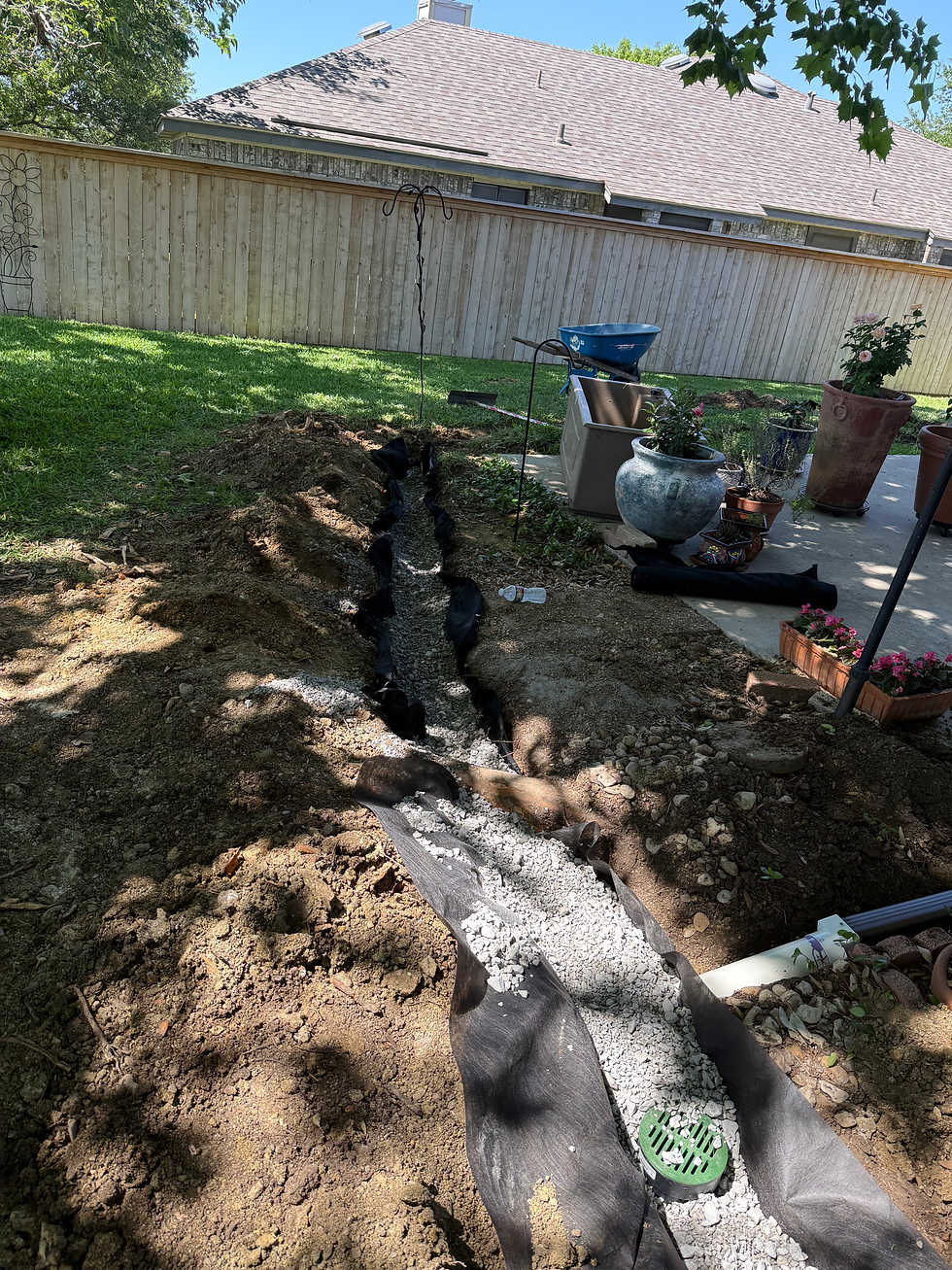
Get a drainage assessment. A professional can see where water needs to go and which fix fits: a French drain for soaked soil, a channel drain along a driveway or patio, a pump drain where there's no slope, or regrading.
We assess and fix drainage problems across Fort Worth and Parker County, including drainage services in Springtown and Weatherford.

Frequently Asked Questions
How long should water stand in a yard after rain?
In most yards, water should soak in or drain away within a day. Puddles that last longer than 24 to 48 hours point to low spots, compacted soil or poor grading.
Can poor yard drainage damage my foundation?
Yes. In North Texas clay, water that pools against the slab and then dries out makes the soil swell and shrink. That repeated movement can crack foundations, so water should always drain away from the house.
Is a French drain always the fix for a wet yard?
No. A French drain works well for soaked soil and low areas, but water running off a driveway may need a channel drain, a flat yard may need a pump drain, and some problems are solved by regrading or extending downspouts.
Should I get a drainage assessment before installing a drain?
Yes. An assessment shows where water is coming from and where it can safely go. Installing a drain without that step risks paying for a fix that moves the problem instead of solving it.
Seeing any of these signs? Bob's Landscape & Irrigation Solutions designs and installs French drains, channel drains, pump drains and custom drainage systems across Fort Worth and nearby cities. Call 817-381-2128 or request a free estimate.
About the author: This guide was written by the team at Bob's Landscape & Irrigation Solutions. The company's founder started it in 2009 as a side business while teaching middle school engineering in Birdville ISD for 14 years, then took it full time. Today the team handles irrigation, drainage, retaining walls, dirt work and artificial turf across Fort Worth and surrounding cities.

Comments