


Soggy Yard: Is It Your Sprinklers or a Drainage Problem?
A soggy yard usually has one of two causes: your sprinkler system is putting down too much water (or leaking), or the yard can't drain the water it gets. The quickest way to tell them apart is timing. Wet spots that show up after rain point to drainage; wet spots in dry weather point to your sprinklers.
The fixes are completely different, so getting the cause right saves money. One calls for sprinkler repair, the other for drainage solutions. This guide shows how to tell which one you're dealing with.
Overwatering vs. Poor Drainage: How to Tell
Clue | Points to sprinklers | Points to drainage |
When the yard is wet | In dry weather, after the system runs | After rain |
Where it's wet | Around one head, a valve box or along a line | Low spots, the foot of a slope, beside the foundation or downspouts |
Pattern | The same spot after every watering | Spreads across low ground and follows the slope |
Water bill | Higher than usual | No change |
Other signs | Low pressure, a zone that won't shut off, heads spraying paving | Erosion, silt on paving, water against the slab |
If your clues land in both columns, you may have both problems. That's common: a low spot that drains slowly gets worse when a nearby zone overwaters it.
Sprinkler Issues That Cause Wet Spots
A leaking pipe or fitting. A crack underground keeps one area wet and often shows up as weak spray elsewhere in the zone.
A valve that doesn't close fully. Water keeps trickling through the zone after the cycle ends.
Low-head drainage. After each cycle, the water left in the pipe drains out of the lowest head, leaving a puddle in the same spot every time. Heads with built-in check valves fix it.
Broken or misaligned heads that soak the same patch, or spray the house, driveway or street.
Watering too long or too often. A schedule set for August will drown a lawn in October.
Our guides on finding a leak in your sprinkler system and checking whether your sprinklers water efficiently walk through these checks.
Drainage Issues That Cause Wet Spots
Low spots and poor grading. Water collects wherever the ground dips, or runs toward the house instead of away from it.
Clay or compacted soil. North Texas clay soaks up water slowly, so heavy rain sits on top.
Downspouts that dump at the foundation. A whole roof's runoff lands in one small area.
Runoff from slopes, neighbors or paving. Water from higher ground or hard surfaces ends up in your lawn.
For the full list of warning signs, see Signs Your Yard Has a Drainage Problem.
A Simple Test You Can Do Yourself
You don't need tools for this, just a few dry days.
Wait for a dry stretch. Give it at least two or three days without rain.
Turn your sprinkler controller off. Leave it off for the whole test.
Check the water meter. Turn off every faucet and water-using appliance in the house, then look at the meter's dial or leak indicator. If it's moving, water is escaping somewhere.
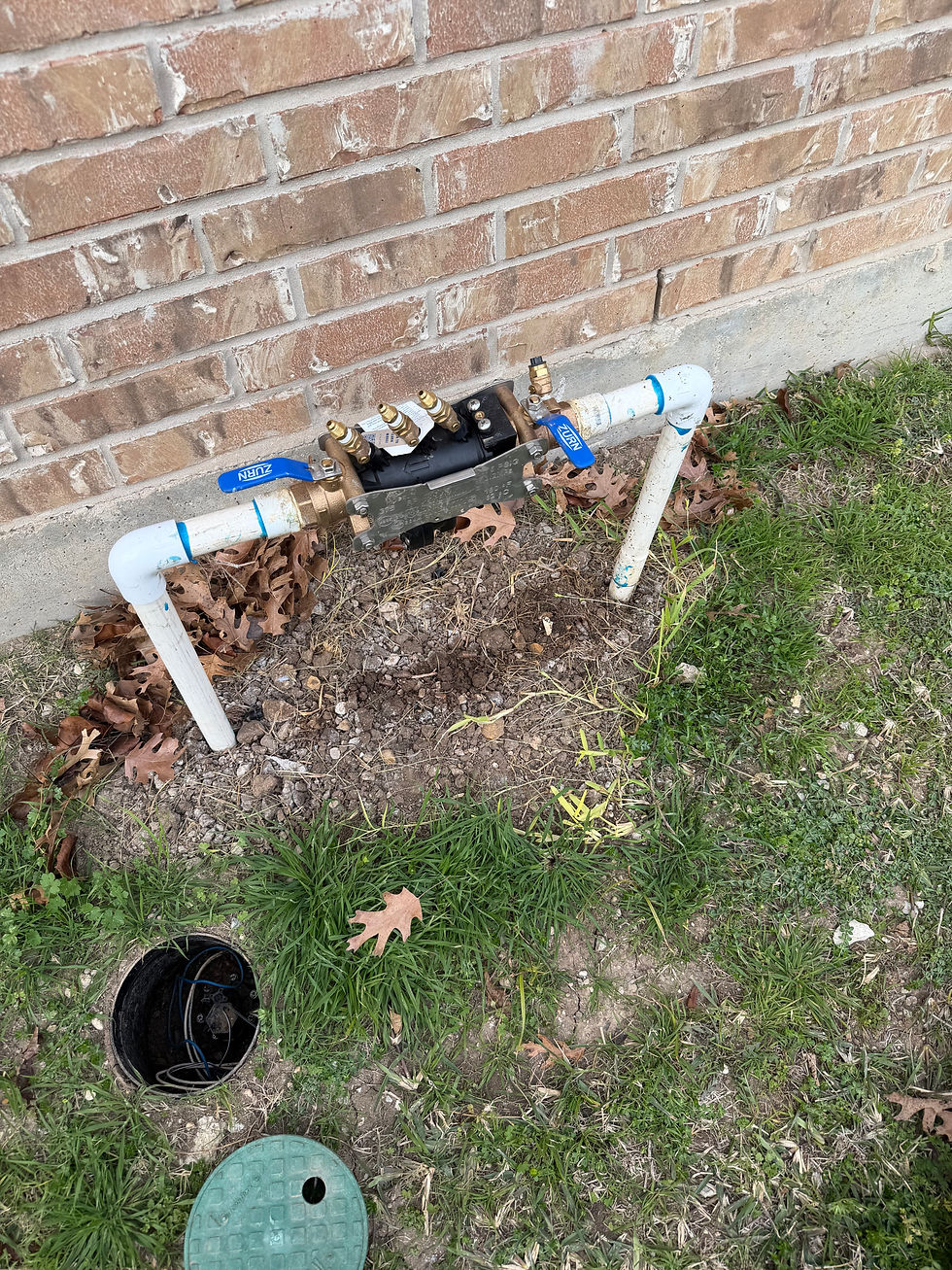
Close the irrigation shut-off valve and check again. If the meter stops, the leak is in your sprinkler system. If it keeps moving, the leak is likely in your home's plumbing or water line, and a plumber is the right call.
Watch the soggy spot. If it dries out with the system off, your watering schedule or a weeping valve is the likely cause. If it stays wet with no rain and no irrigation, suspect a leak.
Run each zone one at a time. Watch for puddles, weak spray, bubbling soil or water running from one head after the zone stops.
Look again after the next rain. If the same area floods after rain with the system still off, drainage is part of the problem.
Fixing the Real Cause
If it's the sprinklers: repair the leak, rebuild or replace the valve, add check valves to stop low-head drainage, adjust or replace heads, and reset the schedule for the season.
If it's drainage: options include a French drain to carry water out of soaked soil, regrading low spots, underground downspout lines, a channel drain along paving, or a pump drain where there's no natural slope.
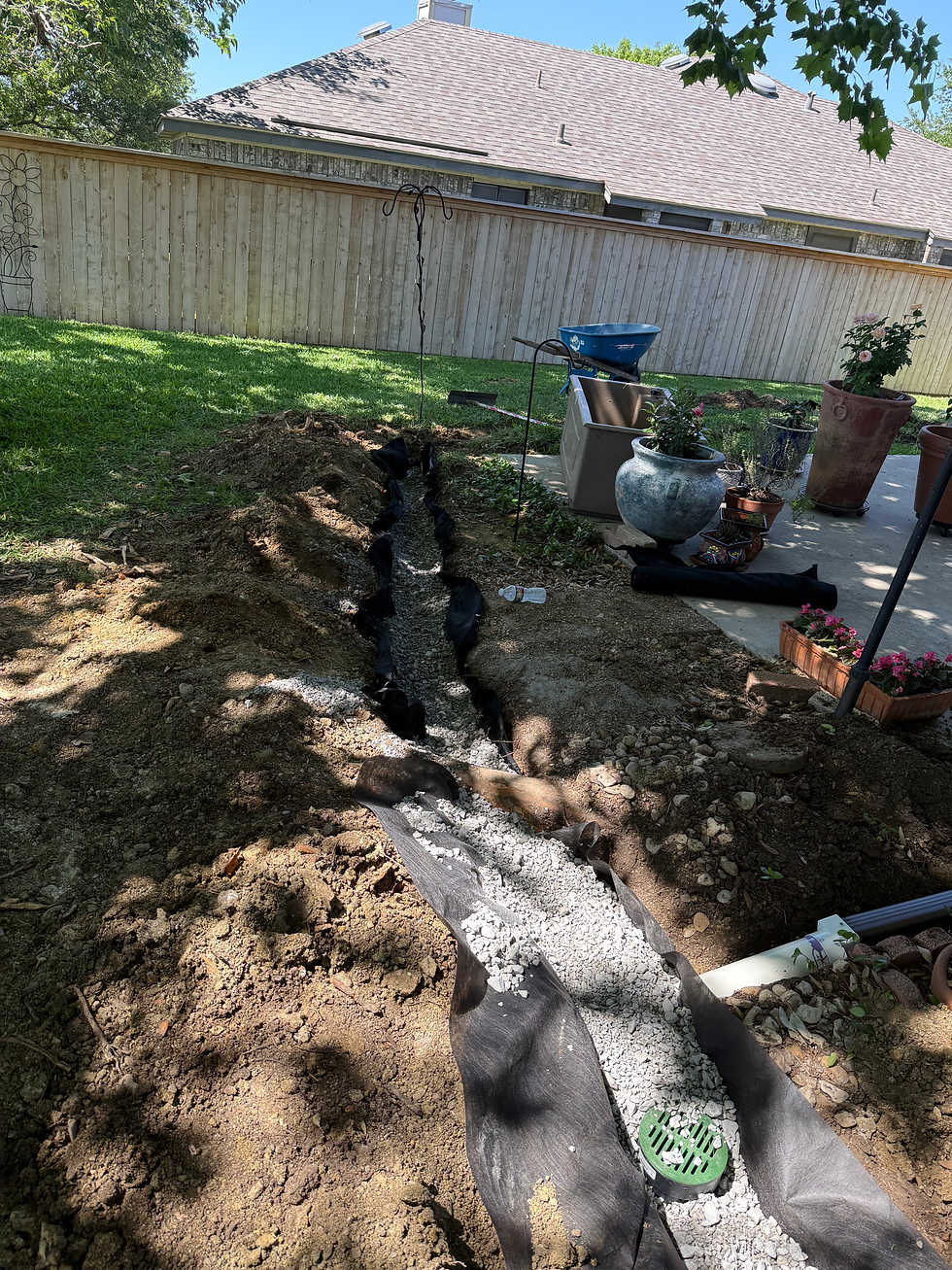
If it's both: fix the irrigation first so you can see the true drainage problem, then size the drainage fix to what's left.
If you're in Azle or Springtown, one call covers both sides. We provide irrigation services in Azle and drainage services in Azle, along with sprinkler repair in Springtown and Springtown drainage services.
Frequently Asked Questions
Why is one spot in my yard always wet?
The most common causes are a leaking sprinkler line or valve, water draining out of the lowest sprinkler head after each cycle, or a low spot where rain collects. Checking whether the spot dries out with the sprinklers off narrows it down.
Can sprinklers cause drainage problems?
Yes. Overwatering saturates clay soil so it can't absorb rain, which makes existing low spots and slow-draining areas much worse. Adjusting the schedule for the season is often the first fix.
How do I know if I have an underground sprinkler leak?
Turn off all water in the house and watch the meter. If it moves, close the irrigation shut-off; if the meter then stops, the leak is in the sprinkler system. Soggy spots and weak spray in one zone are other signs.
Should I call a plumber or an irrigation company?
If the meter keeps moving with the irrigation shut-off closed, call a plumber, because the leak is likely in your home's plumbing. If the meter stops, or the yard floods after rain, call an irrigation and drainage company.
Not sure what's soaking your yard? Bob's Landscape & Irrigation Solutions fixes both sprinkler and drainage problems, so one visit can find the real cause. Call 817-381-2128 or request a free estimate.
About the author: This guide was written by the team at Bob's Landscape & Irrigation Solutions. The company's founder started it in 2009 as a side business while teaching middle school engineering in Birdville ISD for 14 years, then took it full time. Today the team handles irrigation, drainage, retaining walls, dirt work and artificial turf across Fort Worth and surrounding cities.


Comments